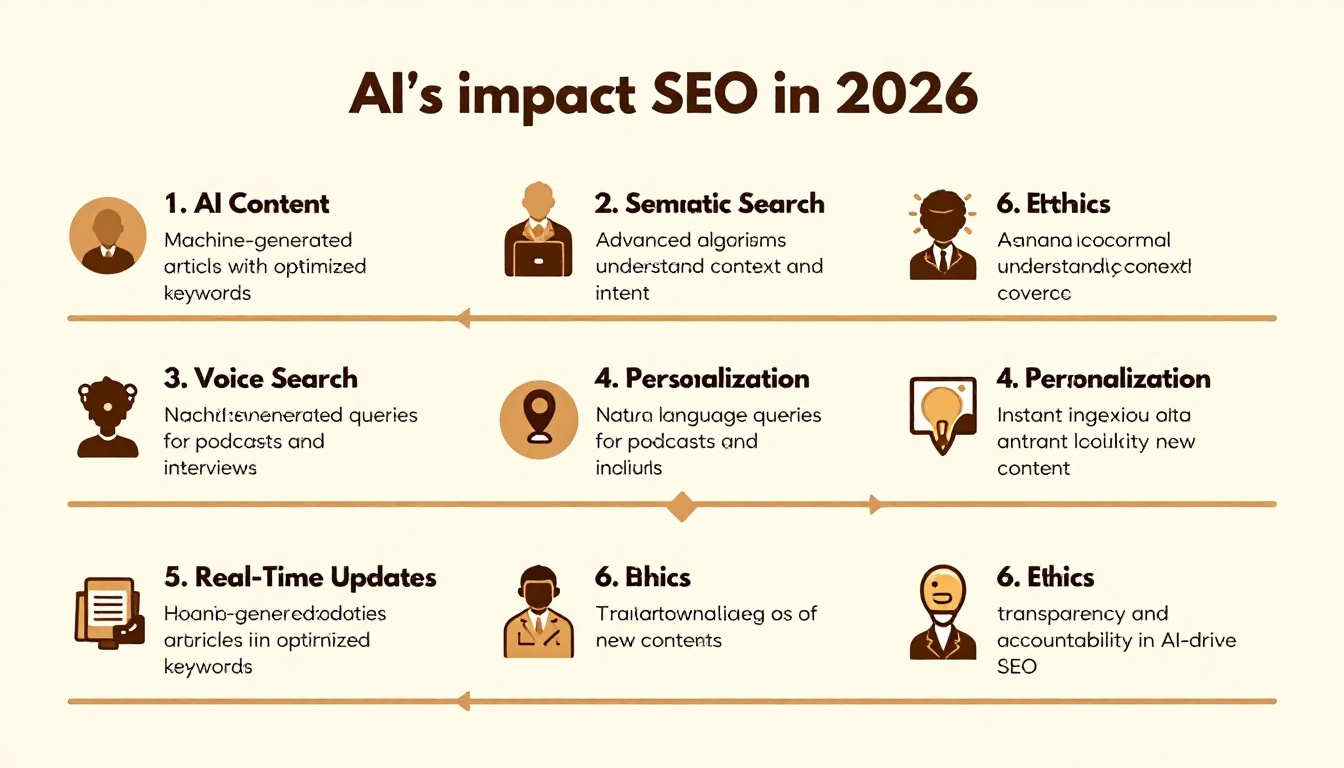
How AI Is Changing SEO in 2026 isn't just a trend — it's a complete redefinition of how search engines rank content and how smart marketers adapt. Gone are the days of keyword stuffing and generic backlink strategies. Today, Google's AI models understand context, user behavior, and genuine value like never before. Let's explore exactly what's changing and how you can stay ahead.
1. AI's seismic shift in SEO
Artificial intelligence has moved from a buzzword to the foundation of modern search. Google's algorithms now use deep learning to evaluate content quality, expertise, and user satisfaction in real time. This means traditional SEO tactics — like exact-match keywords or bulk directory links — are fading fast.
Instead, AI rewards websites that answer questions completely, load instantly, and provide unique insights. How AI Is Changing SEO in 2026 can be summed up in one phrase: it's becoming a conversation rather than a checklist.
2. How AI-powered search works now
Search engines now use multimodal AI that understands text, images, video, and audio simultaneously. When you search "best hiking boots for wet trails," Google doesn't just match words — it understands the context, your location, past behavior, and even compares product reviews semantically.
- Generative answers: AI compiles custom results from multiple sources.
- Visual understanding: Google can analyze infographics and video content directly.
- Personalization: Search results adapt to user history and intent signals.
To rank, your content must be structured, comprehensive, and easy for AI to parse. Use clear headings, schema markup, and answer specific questions directly.
3. Smarter content creation & optimization
AI tools now assist writers, but Google penalizes purely generated content without human expertise. The winning formula in 2026 is human-led, AI-assisted content. Start with topic clusters identified by AI, then add original data, case studies, and expert quotes.
Semantic keyword variations are more important than ever. Instead of repeating "best coffee maker," use related terms like "top-rated espresso machines," "brewing equipment reviews," and "home barista guides." AI detects these natural language patterns.
4. Cracking user intent with machine learning
AI excels at classifying search intent into four categories: informational, navigational, commercial, and transactional. But 2026's AI goes deeper — it recognizes emotional intent, urgency, and even seasonal context.
For example, a query like "fix leaking faucet" triggers different results if the user is a DIY homeowner vs. a renter looking for a plumber. AI distinguishes this through click patterns and dwell time. Your job is to create intent-specific content: how-to guides for DIY, service comparison pages for hiring.
5. AI for technical SEO & automation
Technical SEO has become predictive. AI can now crawl your site and forecast issues before they affect rankings. Broken links, slow JavaScript, and poor Core Web Vitals are flagged in real time by tools like SEO Toolkit Pro's AI Auditor.
- Automated schema generation: AI suggests and implements structured data.
- Log file analysis: Machine learning spots crawl budget waste.
- Predictive analytics: Know which pages will lose traffic next month.
Embracing these automations frees you to focus on strategy and creativity — the human elements AI can't replace.
6. Future-proofing your AI SEO strategy
To thrive in 2026 and beyond, build your strategy around three pillars: authenticity, adaptability, and authority. Publish original research, update content frequently, and earn mentions from trusted industry sites. AI models reward brands that demonstrate real-world expertise.
Also, optimize for voice and visual search. Over 40% of searches now use voice, and visual queries via Google Lens are climbing. Make sure your images have detailed alt text, transcripts for video, and conversational FAQ sections.
🔧 SEO Toolkit Pro Tools You Can Use Today
Stay ahead of AI-driven SEO with these powerful features:
- AI Content Grader – Scores your content for semantic depth and AI readability.
- Intent Predictor – Classifies search intent for any keyword with 94% accuracy.
- Technical SEO Bot – Scans and fixes schema, speed, and crawl issues automatically.
- RankForecast AI – Predicts ranking difficulty using machine learning.
Join thousands of SEO pros using AI to work smarter, not harder.
7. Frequently asked questions
No — AI automates repetitive tasks but can't replace strategic thinking, creativity, and relationship building. SEOs who use AI as a co-pilot will thrive.
Use clear, factual headers, provide concise answers to common questions, and cite credible sources. AI pulls from pages that structure information logically.
Not if they focus on niche expertise. AI actually helps small sites by ranking authentic, detailed content over generic authority. Your unique voice is your advantage.
Audit your content for topical authority. Use SEO Toolkit Pro's AI Gap Analysis to find missing subtopics that AI expects. Update old posts with fresh data and improved structure.
8. Key takeaways
- ✅ How AI Is Changing SEO in 2026 moves focus from keywords to user intent and semantic depth.
- ✅ AI-powered search rewards authentic expertise, structured data, and multimedia optimization.
- ✅ Use AI tools to automate technical SEO, but keep human creativity for content and strategy.
- ✅ Optimize for conversational, voice, and visual search — not just typed queries.
- ✅ SEO Toolkit Pro provides the AI-driven analytics you need to rank in this new era.
The AI revolution in SEO is here to stay. But rather than fear it, embrace it as your most powerful ally. By understanding how AI Is Changing SEO in 2026 and adapting your workflow with intelligent tools, you'll not only keep your rankings — you'll dominate them.